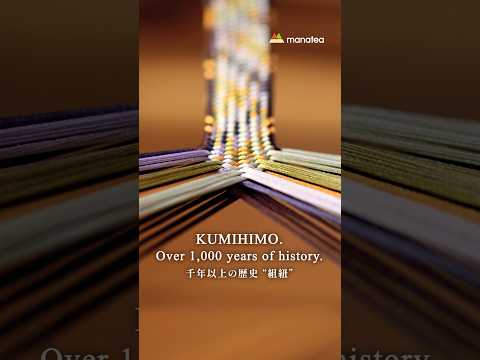
Hands braiding silk cords on a wooden marudai stand, threads in motion

Inside Kujokan · Tokyo National Museum

Traditional KUMIHIMO Making Experience — Discover the Craft of DOMYO, Founded in 1652

For sixty minutes, sit inside Kujokan — a historic hall not usually open to the public — and braid a silk cord on a marudai stand, guided by Domyo, a kumihimo studio working since 1652. Choose your colors, learn the Nara-gumi technique, and finish your cord as a strap or a bracelet to take home.

A finished kumihimo strap in braided silk with gold hardware — the workshop's take-home piece

Strap or bracelet — you choose

Venue
Kujokan, Museum Garden
Date
Tue, Sep 15, 2026
Price
From ¥13,000 / person
Format
60 min · small group

Reserve your seat

See available times

Why here

Kujokan

Kujokan once stood within the Kujo family residence inside the Kyoto Imperial Palace compound — one of the five houses from which Japan's imperial regents were chosen. The Kujo family donated the building to the Museum in 1934, and it was relocated to the garden you see today.

Inside, the fixed wall panels and sliding doors carry Kano-school landscape paintings, and the transoms are carved with a wisteria-diamond motif. For sixty minutes, this hall most visitors only view from outside is where you will sit, thread in hand, looking out over the garden.

It's a different kind of museum visit — pair it with the galleries next door, and the afternoon becomes something you made with your own hands, not only something you looked at.

Kujokan's exterior in the museum garden, a traditional Japanese building with a tiled roof

The experience

What you'll do

01

History, hand to hand

Domyo has made kumihimo since 1652. Hear how these cords once tied armor, sutra scrolls, and obi.

02

Threads you choose

Hand-dyed silk in the colors used in Domyo's own products — pick the palette that's yours.

03

A craftsman's tool

Braid on a marudai, the same stand artisans use, learning Nara-gumi — a pattern whose earliest surviving examples are kept in Nara's Shosoin Imperial Repository and Horyuji Temple.

04

Something to keep

Finish your cord as a strap or a bracelet, and carry a piece of the day home with you.

Watch

See it in motion

Thumbnail for a video showing the kumihimo workshop atmosphere

Tap to watch on YouTube

Sixty minutes

Start to finish

  1. 00 – 05 min

    Welcome

    Settle into Kujokan and meet your instructor from Domyo.

  2. 05 – 20 min

    Domyo & the colors

    Its 1652 origins, and the silk threads you'll choose from.

  3. 20 – 48 min

    Braiding on the marudai

    A demonstration, then Nara-gumi by your own hands, working toward a strap or a bracelet.

  4. 48 – 60 min

    Finishing & photos

    Your piece takes shape, questions answered, photos taken.

Two finished kumihimo strap keychains in different color combinations

Choose your finish

Strap or bracelet

Your cord becomes a strap (¥13,000) or a bracelet (¥15,000) — you choose which when you reserve. Both come from the same Nara-gumi technique, finished two different ways to wear.

Bracelets take a little longer to braid, so the final 3:30pm session is strap only.

Domyo storefront in Tokyo, signage reading Kumihimo Experience by Domyo, braiding heritage since 1652

Your instructor

Domyo

Domyo has made kumihimo in Tokyo since 1652. Its cords have long appeared in court dress, armor, Buddhist ritual objects, tea ceremony, and obijime sashes — kumihimo has quietly held Japanese life together for centuries.

In this workshop, an instructor from Domyo teaches in English, using the same marudai and hand-dyed silk threads used in the studio's own work — a rare chance to move your hands the way an artisan does, not just watch one work.

You might recognize this

In Your Name. (Kimi no Na wa, 2016), Makoto Shinkai's anime, a kumihimo cord tied in the heroine's hair becomes the story's symbol of connection — the film that introduced kumihimo to audiences worldwide, setting Japanese-film box-office records across East Asia. This workshop doesn't recreate the film; it teaches the same centuries-old craft, from the people who still practice it.

Color & craft

What you're working with

Even the same braid looks completely different in a different color. Calm tones, vivid tones, colors tied to the season — the palette you choose is what makes your piece yours, drawing on the same color sensibility that runs through Japanese textile tradition.

Is this for you

Who this is for

Built for visitors from abroad drawn to Japanese craft, color, and history — and open to anyone in Tokyo who wants the same experience in English.

Getting there

Kujokan, Museum Garden

Tokyo National Museum, 13-9 Ueno Park, Taito-ku, Tokyo 110-8712. Enter through the main gate and continue into the garden. Please arrive at Kujokan at least 15 minutes before your session begins.

Reserve

Available sessions

Date
Tuesday, September 15, 2026
Duration
60 minutes
Language
Led in English

1Choose your finish

  • Strap — ¥13,000
  • Bracelet — ¥15,000

2Choose your time (8 guests per session)

  • 1. 11:30am
  • 2. 12:30pm
  • 3. 1:30pm
  • 4. 2:30pm
  • 5. 3:30pm (strap only)
Reserve your seat

You'll continue to our booking page, where you can choose your date, time, and finish (strap or bracelet). Session times and capacity are being finalized with the museum and may be adjusted.

Good to know

  • Museum admission is required separately from the workshop fee.
  • No experience or supplies needed — everything is provided.
  • Choose a strap or bracelet when you reserve. The 3:30pm session is strap only, as bracelets take a little longer.
  • Books and kumihimo accessories — bracelets, earrings, and more — will also be available for purchase at the venue.
  • Free cancellation until 6:00pm the day before; cancellations after that time, or no-shows, are charged in full.

Before you join

Good to know

Venue
Kujokan, Museum Garden, Tokyo National Museum (13-9 Ueno Park, Taito-ku)
Language
Instruction is led in English; Japanese support is available
Age
Elementary-school age and up; there is no separate child rate
Check-in
Please arrive at Kujokan at least 15 minutes before your session
Attire
No special dress required; avoid short skirts, as you'll sit with the stand between your legs
Materials
Everything is provided — no need to bring anything
Thread colors
Chosen on the day from the palette prepared for your session
To take home
Your finished strap or bracelet is yours to keep
Museum admission
General ¥1,000, university students ¥500; free under 18 and 70+ — required separately, at the main gate
Luggage
Suitcases cannot be brought into the Museum; coin lockers are available at the station
Cancellation
Free until 6:00pm the day before; cancellations after that time, or no-shows, are charged in full
Weather
The session is cancelled if the Museum is closed; schedules may change at the Museum's discretion